

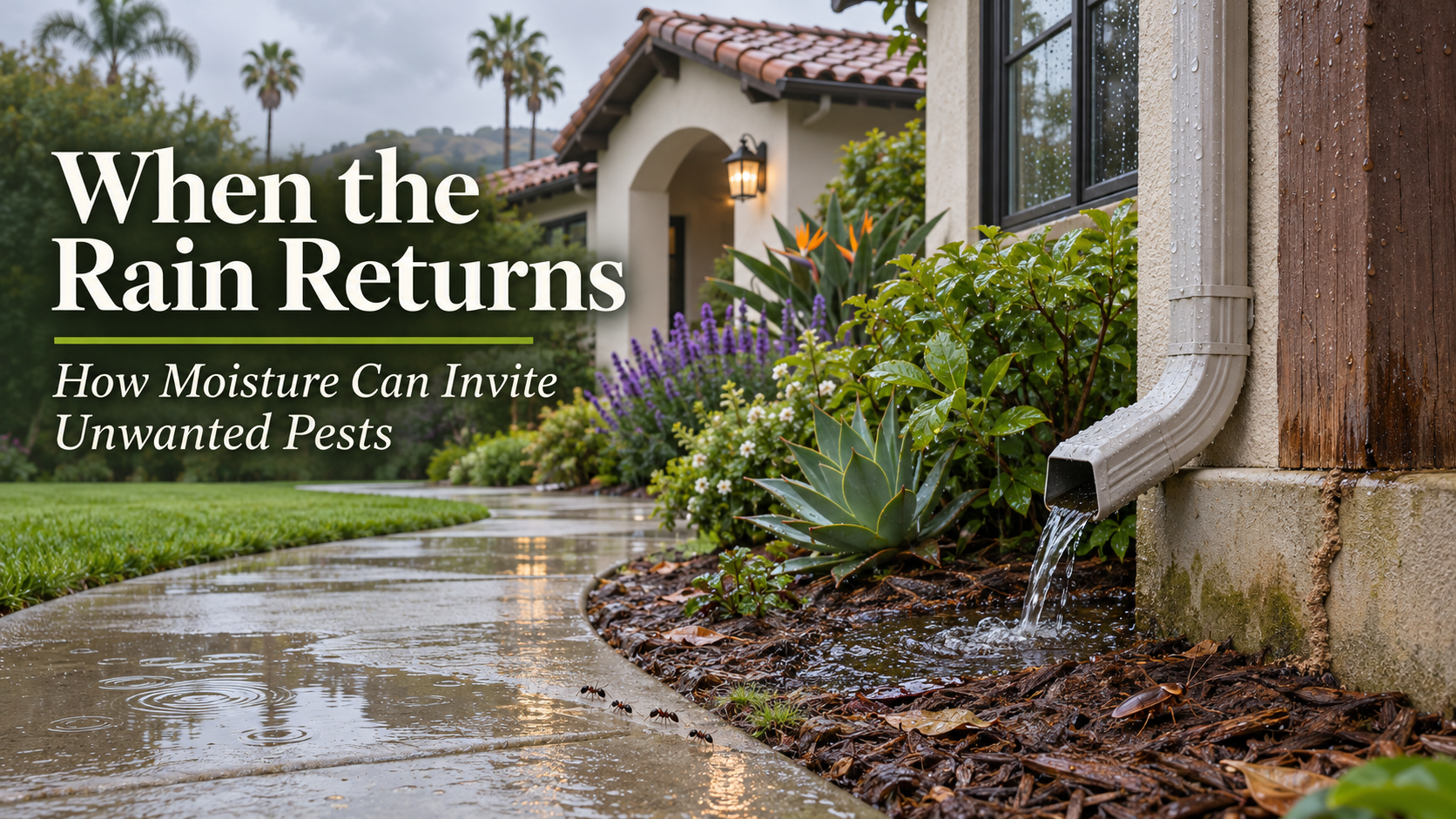
When the Rain Returns: How Moisture Can Invite Unwanted Pests
After months of dry afternoons, the first steady rain in Southern California has a way of revealing things homeowners haven’t thought about in a while. A downspout emptying too close to the house. A planter sitting in a shallow puddle. A patch of soil that stays damp long after the driveway has dried.
Sometimes, there’s another surprise: insects appearing in places where you haven’t noticed them before.
When homeowners begin seeing pests after rain, it’s tempting to assume the storm brought them. Often, the explanation is less dramatic. Water changes the conditions around a property, and certain pests respond to those changes.
Understanding that connection can help you recognize potential problems before they become more difficult to manage.
The Important Part Isn’t the Rain. It’s What Stays Wet.
A passing shower isn’t necessarily a concern. Water that collects in the same places repeatedly deserves a closer look.
Consider two homes on the same street. One has drainage that carries rainwater away from its exterior walls. The other has a downspout releasing water directly beside a wooden fence, where the surrounding soil remains damp for days.
Both properties received the same rainfall, but the conditions left behind are different.
For pests that depend on moisture, those small differences can matter. Damp soil, sheltered debris, and poorly ventilated spaces may provide the conditions they need to remain active.
This doesn’t mean every wet area will develop an infestation. It means moisture is one part of the environment worth paying attention to.
Why Termites Deserve Special Attention
Not all termites behave the same way around moisture, which is an important distinction for California homeowners.
Subterranean termites live in soil and depend on moisture to survive. They can reach wood through protected pathways called mud tubes, sometimes traveling along foundations or other concealed surfaces.
Dampwood termites, as their name suggests, are associated with wood that contains substantial moisture. Drywood termites are different. They can establish colonies in relatively dry wood without maintaining a connection to the soil.
The University of California’s Integrated Pest Management Program explains these differences and notes that some subterranean termite species may swarm on warm days following fall or spring rain.
Seeing winged insects after a storm doesn’t automatically mean your home has termites. However, discarded wings, suspicious tubes along foundation walls, or damaged wood are reasons to have the situation evaluated.
The goal is to identify what’s actually happening rather than making assumptions based on the weather.
Ants May Be Looking for Somewhere Drier
Ants are another reason homeowners sometimes notice unexpected activity following a storm.
Some colonies nest in soil close to the surface. When heavy rainfall saturates those areas, ants may move into more protected spaces, occasionally finding their way indoors.
A trail along a kitchen baseboard doesn’t necessarily begin with something happening inside the kitchen. The change may have started outside, where the ants’ usual environment became less suitable.
Look for recurring trails near door thresholds, exterior wall openings, and areas where landscaping meets the house.
Instead of focusing entirely on the insects you can see, pay attention to where they’re entering and whether moisture is collecting nearby.
Cockroaches Appreciate the Places We Forget to Check
Cockroaches don’t need an obviously wet room to find a comfortable hiding place.
A damp utility box, shaded vegetation, or a small plumbing leak can provide moisture and shelter. Some species live primarily outdoors and occasionally enter buildings, while others can establish themselves inside.
That distinction matters because the appropriate response depends on the insect involved and where it’s living.
A clean kitchen is still important, but cleanliness alone doesn’t eliminate every condition cockroaches can use. A dripping pipe beneath the sink or a damp space behind an appliance may deserve just as much attention as the countertop.
Take a Walk Around Your Property After the Next Rain
You don’t need special equipment to make a few useful observations.
Once conditions are safe, spend a few minutes looking at how water moves around your property.
- Follow the downspouts. Notice whether water drains away or collects beside walls and foundations.
- Look beneath planters and outdoor storage. Containers, trays, and stored materials can hold moisture longer than the surrounding ground.
- Check plumbing and utility areas. A slow leak beneath a sink or near a water connection can provide moisture regardless of the weather.
- Pay attention to wood near damp soil. Fence posts, stored lumber, and other wooden materials deserve attention when they remain wet.
- Notice patterns in pest activity. Repeated sightings around the same damp area can be more informative than finding one insect after a storm.
These observations don’t replace a professional inspection, but they can help you recognize conditions that deserve attention.
When Is It Time to Be Concerned?
A wet patio after rainfall is normal. A section of wood that remains soft, deteriorating, or persistently damp is a different situation.
Similarly, seeing an occasional ant outdoors isn’t unusual. Repeated trails entering the house, recurring cockroach sightings, or suspicious evidence near wooden structures may call for a closer investigation.
The Environmental Protection Agency emphasizes reducing access to food, water, and shelter as part of an effective approach to pest prevention.
That’s an important principle because treating visible insects doesn’t necessarily address the conditions allowing them to return.
Sometimes the first improvement is repairing a leak, correcting drainage, or removing materials that stay damp. Other situations require professional identification and targeted pest treatment.
A Little Attention Before the Next Storm
Rain offers homeowners something useful: a chance to see how their property handles moisture.
The areas that stay wet, the places insects repeatedly appear, and the small maintenance issues that become noticeable after a storm can all provide clues about potential pest problems.
For homeowners throughout Orange County and Southern California, paying attention to those details can be a practical part of seasonal home maintenance.
If you’re concerned about possible termite activity, learn more about Richland Termite & Pest Control’s termite inspections.
And if you’ve noticed recurring pest activity or signs you can’t confidently identify, contact Richland Termite & Pest Control to arrange an inspection.
Sometimes the most useful thing a rainy day reveals isn’t the weather itself, but the small things around your home that deserve a closer look.
