

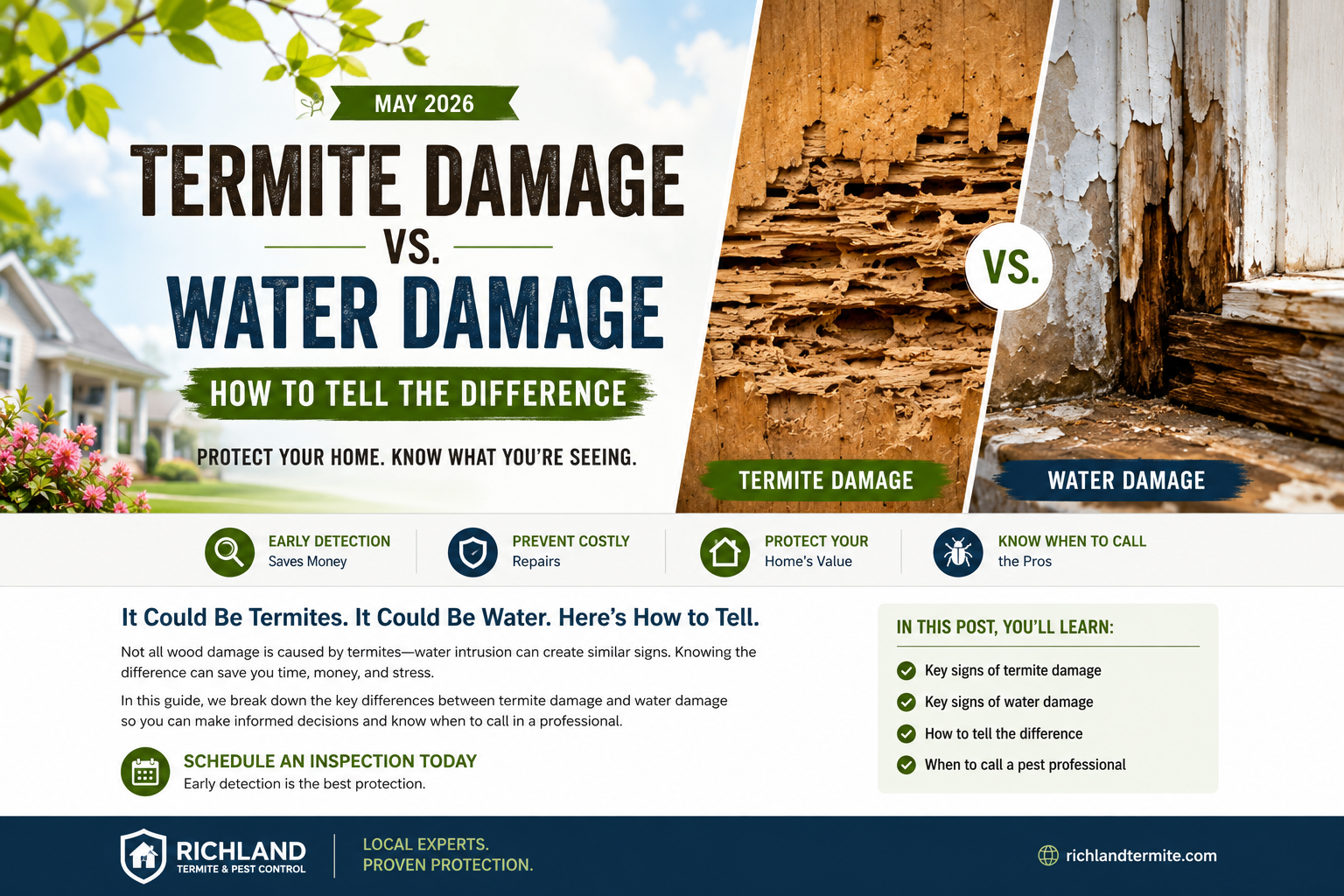
Termite Damage vs. Water Damage: How to Tell the Difference
You notice peeling paint. The baseboard feels soft. A section of trim looks warped.
The first question most homeowners ask is simple: Is this termites?
The honest answer is that damage to wood doesn’t always point to one cause. Moisture and insects can create similar surface symptoms. Understanding termite damage vs water damage starts with how each problem develops.
How Termite Damage Forms
Termites don’t attack wood from the outside. They enter from concealed points and feed internally. That means the surface may look mostly intact while the inside has been hollowed out.
- Wood that sounds empty when tapped
- Thin outer layers that collapse under pressure
- Mud tubes along foundations or walls
- Discarded wings near windows or light fixtures
According to the National Pest Management Association, termites cause billions in structural damage annually across the U.S., much of it discovered only after significant internal deterioration.
How Water Damage Develops
Water damage usually starts with a leak, poor drainage, roof intrusion, or plumbing failure. Instead of hollowing wood from the inside out, moisture weakens it by breaking down its structure over time.
- Staining or discoloration
- Swelling or rippling paint
- Wood that feels spongy across a wider surface
- Mold or mildew growth
- A persistent musty odor
Where Confusion Happens
Both termite and water damage can soften wood and distort trim. The difference is often in the pattern. Termite damage appears irregular and hollowed, while water damage looks swollen, layered, or stained.
Why Proper Identification Matters
Treating moisture damage like a termite issue wastes time. Ignoring termites because damage “looks like water” can become expensive.
The Environmental Protection Agency emphasizes prevention and early identification as central to protecting structural integrity and avoiding compounding damage.
When to Schedule an Inspection
- Wood that feels unusually soft
- Changes in window or door alignment
- Visible mud tubes
- Repeated swarmers indoors
- Ongoing moisture issues near damaged wood
If you’re unsure whether you’re looking at termite damage vs water damage, schedule an inspection with Richland Termite & Pest Control and protect your home with informed action.
