

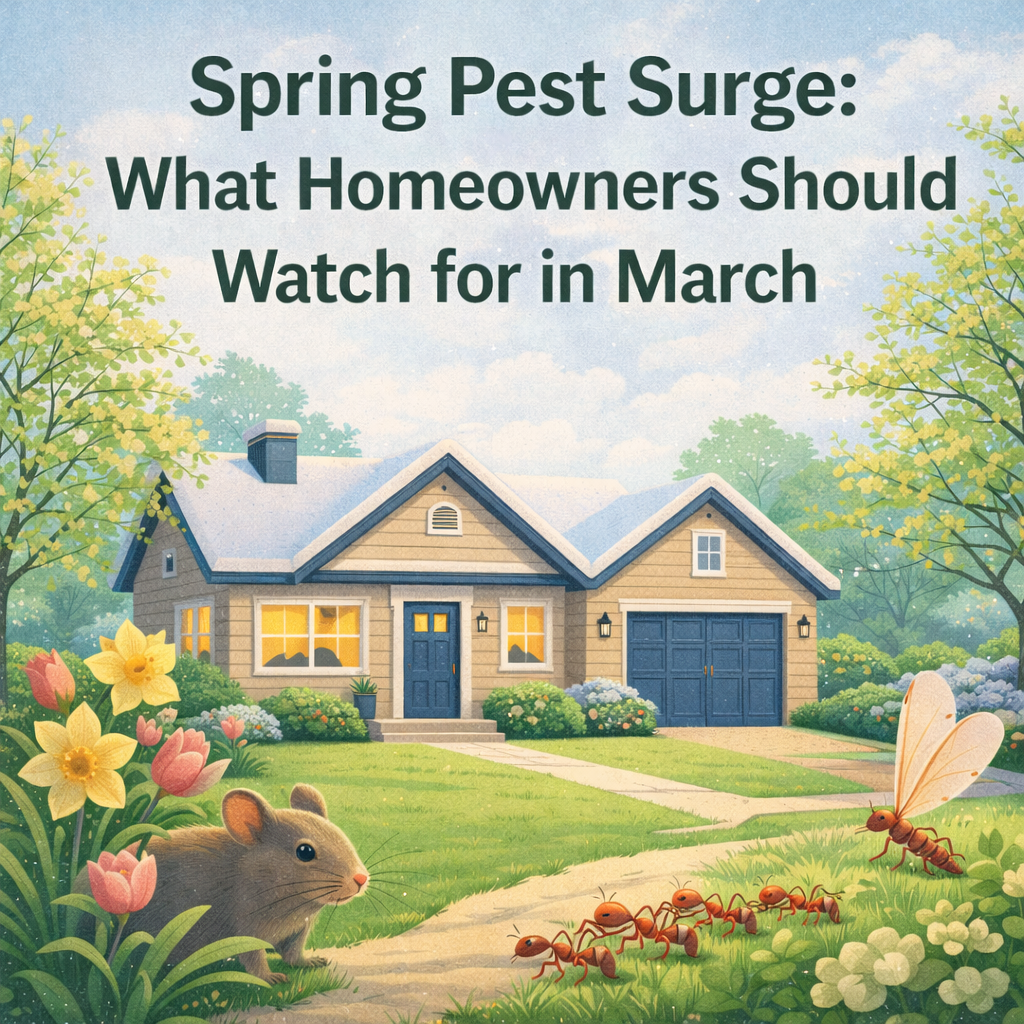
You may not notice it at first. A warmer afternoon. A few more open windows. Longer daylight. But beneath that seasonal reset, spring pest activity begins to accelerate. What felt dormant in winter starts moving again.
Pests don’t suddenly appear in spring. They’ve been waiting.
Why March Triggers Pest Movement
As temperatures rise, insects and rodents respond quickly. Ant colonies expand their foraging range. Termite swarmers prepare to emerge. Rodents that sheltered indoors during winter become more active as they search for food and nesting materials.
Moisture plays a role too. Early spring rains soften soil, making it easier for subterranean termites to travel. Warm, damp conditions create ideal environments for ants and other insects to explore new entry points.
March is a transition month. That transition is when infestations begin forming.
Early Warning Signs Most Homeowners Miss
- A thin trail of ants near a baseboard
- Discarded insect wings near a window or light fixture
- Small piles of sawdust-like material near wood trim
- New scratching sounds in attic spaces
- Mud tubes forming along foundation walls
These signs are easy to overlook because they seem minor. But minor activity in March can become widespread by May.
Termites: The Spring Concern No One Sees
Termite swarmers often appear on warm days following rain. Homeowners sometimes mistake them for flying ants and move on. But swarming is not random—it’s a signal that a mature colony is nearby.
According to the National Pest Management Association (NPMA), termite damage costs U.S. homeowners billions annually, much of it uncovered only after structural damage has progressed.
Ants and Rodents Don’t Pause
Ants follow food and moisture. Rodents follow shelter and easy access.
Even small cracks around doors, utility lines, and vents become entry points during this seasonal shift. March is when prevention matters most, because colonies are expanding but not yet established inside.
Why a March Inspection Makes a Difference
Early-season inspections focus on:
- Identifying new entry gaps caused by winter weather
- Checking foundation lines and crawl spaces
- Looking for early swarm indicators
- Assessing moisture issues around the property
The Environmental Protection Agency (EPA) emphasizes prevention and monitoring as core principles of long-term pest management.
Schedule your March inspection with Richland Termite & Pest Control and stay ahead of the season.
