

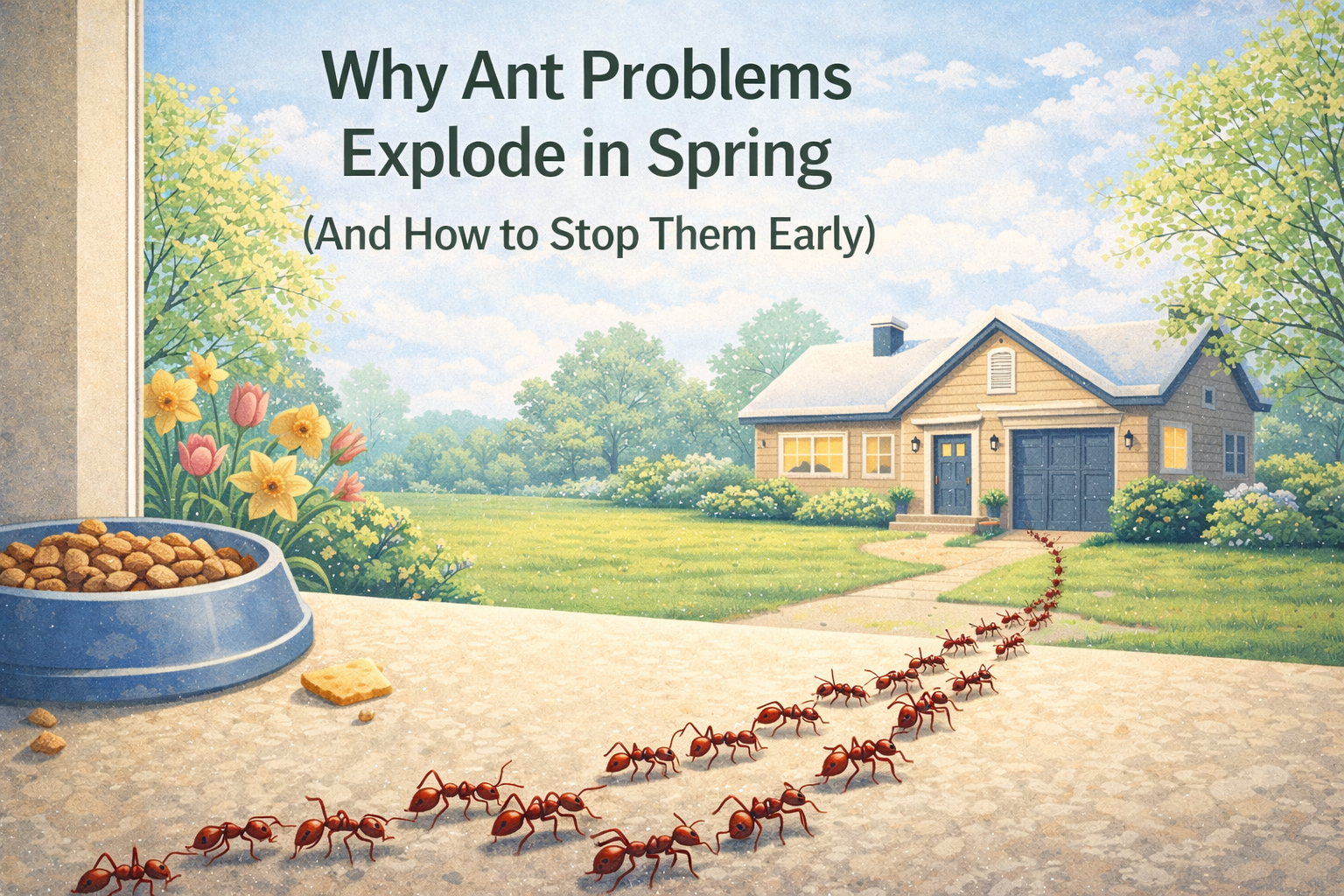
Spring ant problems rarely begin inside the home. They begin underground.
What Changes in April
As the ground temperature rises, ant colonies shift into expansion mode. Worker ants increase their foraging range to support a growing colony. That search leads them toward moisture, food, and stable shelter.
Your home provides all three.
Crumbs under appliances, pet bowls left overnight, minor leaks under sinks, and condensation around windows create small but consistent food and water sources. To a colony, that’s opportunity.
Why the Problem Escalates Quickly
An ant trail isn’t random wandering. It’s communication.
When a worker finds food, it leaves behind a chemical marker that guides others directly to the source. Within hours, a few scouts can turn into a steady stream. Within days, what seemed manageable feels constant.
That escalation is why spring ant problems feel sudden. The colony was already established nearby. April simply activates expansion.
The Types of Ants That Appear in Spring
- Odorous house ants trailing along baseboards
- Argentine ants forming long outdoor lines near foundations
- Pavement ants emerging near driveways and sidewalks
Each species requires a slightly different treatment approach. Spraying visible trails may eliminate workers temporarily, but it doesn’t address the colony itself.
Why DIY Often Falls Short
Surface treatments can scatter a colony instead of eliminating it. When disturbed improperly, ants sometimes split into multiple satellite colonies, making the issue harder to control.
According to the Environmental Protection Agency (EPA), effective pest management focuses on identifying the source and removing attractants rather than simply reacting to visible insects.
How to Get Ahead of Spring Activity
- Sealing cracks around windows, doors, and utility lines
- Fixing small moisture issues before they become attractants
- Storing pantry goods in airtight containers
- Keeping landscaping trimmed away from foundation walls
- Scheduling early-season inspections before colonies expand further
April is when prevention is most effective. Once temperatures climb into late spring, colonies grow larger and more persistent.
Schedule an inspection with Richland Termite & Pest Control and stop spring ant problems before they spread.
